
The aim of SDG 6
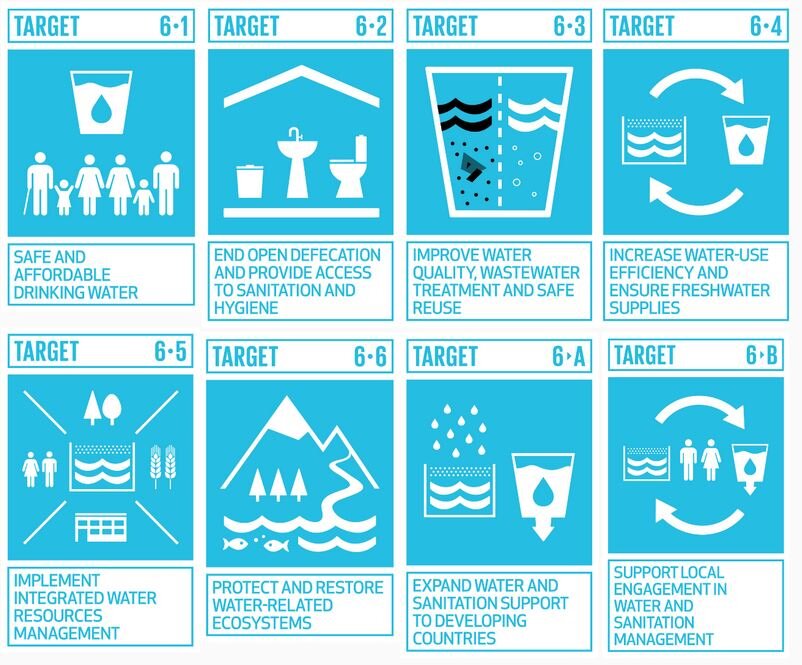
The aim of SDG 6 Clean Water and Sanitation is to ensure availability and sustainable management of water and sanitation for all, improving water quality and infrastructure. It supports universal access to safe water, sanitation services, and efficient water use.
Further resources
The website of the United Nations gives more insights into this SDG, its targets and indicators as well as its worlwide progress.
The website of the Global Goals also gives more information on the single targets, but also on possible actions, and further resources.
Besides the classical carbon footprint, there is also the approach to monitor the amount of water people use for their daily life and products they consume. Watercalculator.org is a site that helps you estimate your total “water footprint,” including both the tap water you directly use and the hidden or “virtual” water used to produce your food, energy, and everyday products. It also offers educational resources and practical tips to reduce this water use and live more sustainably.If you want to calculate your water footprint, take a look at this calculator.
The Water We Eat is an interactive website focused on visualizing the "virtual water" embedded in everyday foods and products through infographics and stories. It educates users on the hidden water costs of consumption to promote awareness of sustainable choices. It makes people aware in an interactive wy how big the indirect water consumption is.
Connection to tourism
Tourism industry practices influence water use, wastewater management, and protection of water resources in destinations. Water-efficient operations and sustainable sanitation reduce local environmental stress. Protecting watersheds supports both ecological health and visitor experiences. Integrated water governance benefits communities beyond tourism.
Best practices
The Iseltrail, a 76 km long-distance hiking route in East Tyrol along Austria's last free-flowing glacial river from Lienz to its source in the Hohe Tauern National Park, manages scarce alpine water resources primarily through conservation advocacy. By promoting low-impact tourism via the trail's infrastructure—including viewing platforms at the Isel Gorge and Umbal Falls, educational signage on glacial meltwater dynamics, and strict no-diversion policies against hydropower projects—the initiative minimizes tourist-related pollution and overuse while raising awareness of the river's vulnerability to climate change and development threats. This experiential approach supports SDG 6 by fostering visitor stewardship, protecting over 90% natural flow paths as biodiversity hotspots, and ensuring the Isel's pristine quality for local communities and 30,000 annual water sports enthusiasts without depleting its ecological flow.
The Iseltrail won the Neptun State Award for Water in 2025 in the WATERREGIONAL category and the third place in the national rankings.
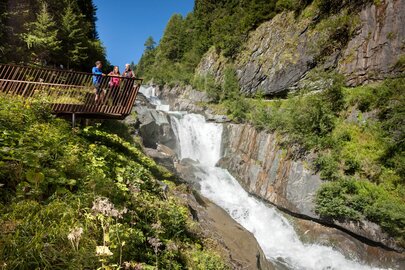
The Montafon tourism region promotes its high-quality water through the advanced ARA Montafon wastewater treatment plant, which serves all tourist communities and earned the Ökoprofit environmental certification in 2024 for efficient purification that maintains excellent water standards despite high seasonal loads. Public campaigns encourage guests to use reusable bottles, tap water from fountains, and water bubblers for sparkling options, while hosts provide carafes and educate on water-saving practices to minimize waste and preserve Vorarlberg's abundant yet vulnerable groundwater resources. These efforts directly support SDG 6 (Clean Water and Sanitation) by ensuring sustainable water management, regular quality inspections, and cross-municipal emergency supply planning that benefits both residents and visitors long-term.
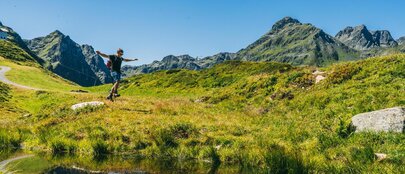
Thematic water hiking trails like the Aquaweg, a accessible from the Golmerbahn Latschau middle station, guiding hikers through diverse water landscapes including streams, waterfalls, and panoramic alpine paths over approximately 6 hours of walking time.
STO Malaga manages its scarce water resources in tourism by actively calculating and reporting the water footprint of hotels, attractions, and destinations through initiatives like the STO Malaga workshops and the UN study "Water Management in Tourism," which quantifies direct (e.g., showers, pools) and indirect (e.g., food supply chains) consumption to identify high-impact areas. Hotels and golf courses use these metrics to implement greywater recycling, low-flow fixtures, and timed irrigation, while public campaigns urge tourists to limit showers to 5 minutes and reuse bottles, easing pressure during droughts that threaten the region's 14 million annual visitors. Pilot projects, such as purple-piped reclaimed water networks for beachfront gardens at El Peñón del Cuervo, demonstrate how footprint data drives infrastructure upgrades and non-potable reuse, ensuring sustainable supply for tourism without depleting drinking water reserves.