
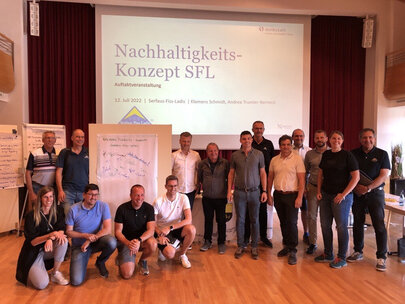
The destination governance in Serfaus-Fiss-Ladis builds multi-stakeholder collaboration and shared decision-making structures that bring together the three local municipalities, the regional tourism association and the major tourism service providers like the cable car companies to jointly define and implement a long-term, cross-sectoral sustainability strategy for the region. This strategy — developed in a participatory process with input from businesses, community representatives and other interest groups — creates a formal governance framework where public, private and civil society actors coordinate goals, share resources and co-design projects for mobility, energy, social infrastructure and environmental protection. Regular joint planning and reporting mechanisms ensure transparency, accountability and alignment around common objectives such as improved mobility, regional economic resilience and quality of life, strengthening institutional partnerships and collaborative capacity across sectors.
The aim of SDG 17
The aim of SDG 17 Partnerships for the Goals is to strengthen global partnerships to implement the SDGs through cooperation and resource mobilization. It involves sharing knowledge, technology, and finance to accelerate progress at all levels.
Further resources
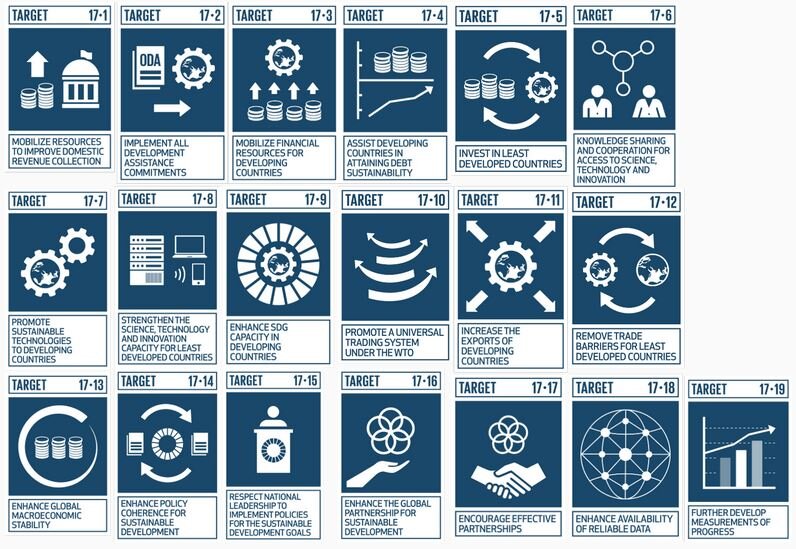
The website of the United Nations gives more insights into this SDG, its targets and indicators as well as its worlwide progress.
The website of the Global Goals also gives more information on the single targets, but also on possible actions, and further resources.
The United Nations tries to collaborate with diverse industries and, institutions and business to join forces. It includes a global registry and platform for voluntary commitments and multi‑stakeholder partnerships that support implementation of the 2030 Agenda and all 17 SDGs. It aims to mobilize and showcase partnerships, facilitate knowledge sharing and progress updates, and engage governments, civil society, business, and other actors in joint action for sustainable development.
Connection to tourism
Tourism benefits from cross-sector collaboration, financing, data sharing, and capacity-building. Multi-stakeholder partnerships accelerate adoption of sustainable practices and scale impacts. Coordinated efforts align tourism with national development priorities and international standards. Shared metrics and transparent reporting enhance accountability and learning.
Best practices
The mobility initiative in the Zillertal valley brings together a wide range of stakeholders — regional government, the Planungsverband Zillertal, the four local tourism associations, transport providers (VVT), local municipalities and tourism businesses — to co-design and implement a holistic, sustainable mobility strategy for both residents and visitors. Through regular collaboration and shared planning forums, these partners have jointly expanded public transport services, coordinated bus and train timetables, integrated guest mobility cards, and developed a valley-wide mobility plan that reduces reliance on private cars while improving access for all users, which strengthens institutional cooperation and mutual accountability. This multi-stakeholder cooperation builds long-term partnerships across sectors and governance levels that align mobility, tourism and environmental objectives, while ensuring that resources and decision-making are shared transparently among public, private and civil society actors.
Boutiquehotel Stadthalle in Vienna as the first SDG hotel actively supports SDG17 by actively building and leveraging collaborative relationships with a variety of partners to advance sustainable development in tourism. The hotel works with social enterprises like Gabarage to design upcycled furniture for its SDG-themed rooms, making the 17 SDGs tangible for guests while supporting local social business partners. It also maintains long-standing, respectful partnerships with suppliers, staff and other stakeholders, strengthens shared sustainability practices, and participates in broader networks that help raise awareness and implementation of the SDGs in hospitality and the city’s economic ecosystem. These partnerships help extend the hotel’s sustainability impact beyond its own operations, demonstrating how joint action and shared values can further the global SDG agenda.